
🛑 Period Panic: What’s in Your Sanitary Pad?
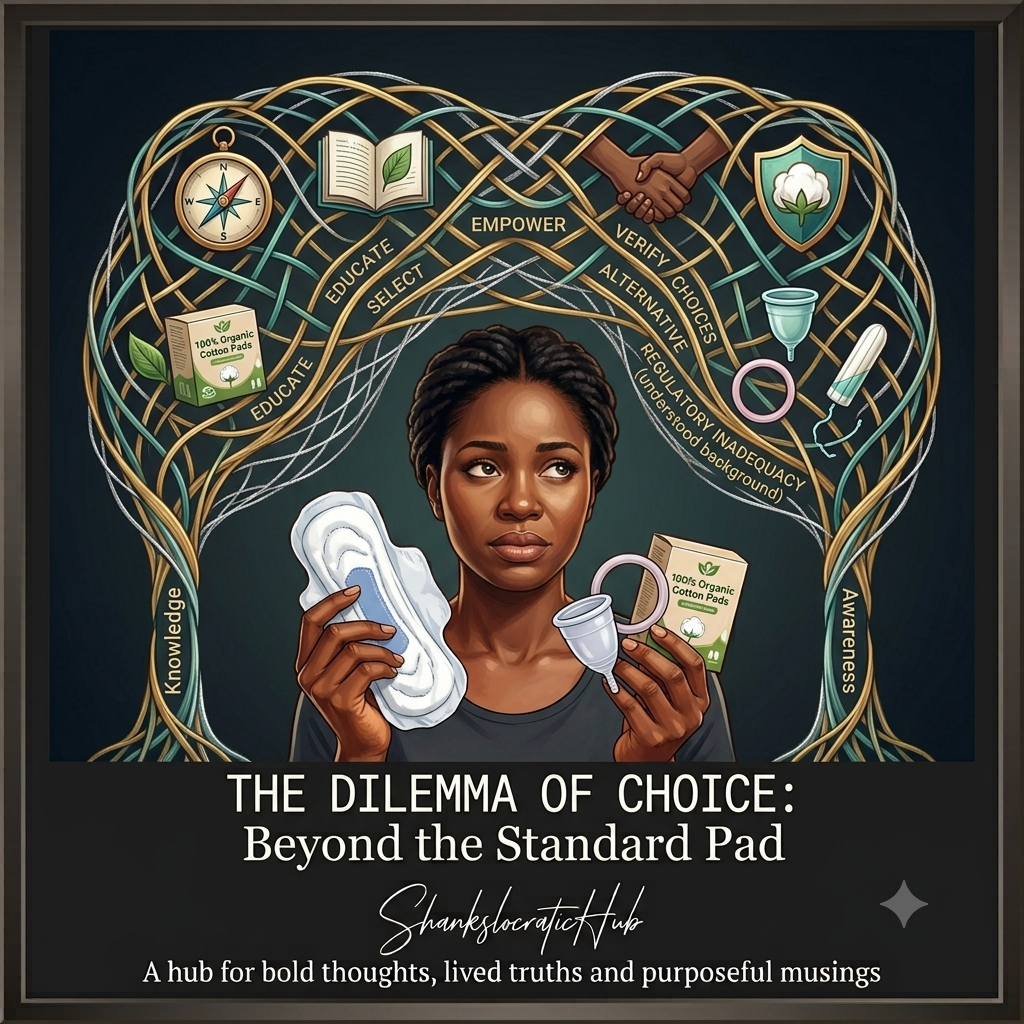
Concern is rising again in Nigeria over videos claiming that common sanitary pads are packed with dangerous chemicals like BPAs, Phthalates, and VOCs. In the silence from regulatory bodies, many women feel left on their own, terrified and unsure of where to turn.
Before you throw your pads away, let's look at the facts.
The core of most standard sanitary pads is made of wood pulp, which is naturally brown. It's often bleached with chlorine to appear white. The absorbent "gels" in some pads are super-absorbent polymers (SAPs), which are petroleum-based. The fears are that this processing, along with plastic barriers, introduces trace amounts of BPAs, phthalates, and VOCs into a pad - chemicals that are known endocrine disruptors.
While the concentration in a single pad might be very low, the concern is about cumulative exposure over decades. The risk of skin irritation and inflammation from these substances is certainly real. However, the exact long-term risks are still heavily debated and not universally confirmed in a way that suggests pads are an immediate health disaster.
But the anxiety is understandable. What are your alternatives, and how do you know they are safe?
Your choices aren't limited to standard pads. You have powerful options, each with its own pros and cons:
🩸 100% Organic Cotton Pads & Tampons:
These are a direct and excellent alternative. Made from all-natural materials without bleaching or SAPs, they dramatically reduce your exposure to synthetic chemicals. They use no plastic, so they are breathable, which lowers the risk of heat, friction, and moisture that can lead to rashes and infections. If your skin is sensitive, this is a top choice.
Self-Check: These are non-invasive and easy to use. The potential health benefits are clear, and they are highly recommended by many for sensitive skin.
🩸 Menstrual Cups:
These are silicone or rubber, inserted like a tampon to collect blood rather than absorb it. They are incredibly eco-friendly, lasting for years, which can save you a fortune in the long run. They can also hold more fluid than a pad or tampon. However, they can be intimidating to learn to insert and remove, and finding the right size can require trial and error. You must also be committed to sterilization.
Self-Check: They are comfortable and virtually leak-proof once you master the technique. You reduce chemical exposure completely. It's a fantastic option if you're willing to go through the learning curve.
🩸 Menstrual Rings (or Diaphragms):
While often known as a form of contraception, these can also be used to collect menstrual flow. They are similar to cups in function but can sometimes allow for period sex, which cups do not. The trade-offs in terms of insertion and removal difficulties are similar to those of menstrual cups.
Self-Check: A versatile option, but a less common and slightly more challenging choice for period management.
Here is the bottom line: You are not helpless. Your body, your choice. If the potential risk of traditional pads concerns you, switching to organic cotton, menstrual cups, or rings are excellent ways to avoid the chemicals in question.
Do not let fear dictate your health decisions. Instead, use your power to make an informed, confident choice that is right for your body and your lifestyle.



1 comment
Log in to join the conversationI know now