
From Joints to Brain: Understanding Sugar Beyond the Sweetness
When we think about eating too much sugar, our minds usually jump straight to weight gain, tooth decay, or an afternoon energy crash. But when high levels of sugar continuously circulate in your bloodstream, its impact goes far deeper than extra calories.
Inside the body, persistent high blood sugar acts less like extra fuel and more like rust in a fine-tuned engine. It gradually degrades tissues, triggers systemic inflammation, and places chronic stress on your vital organs.
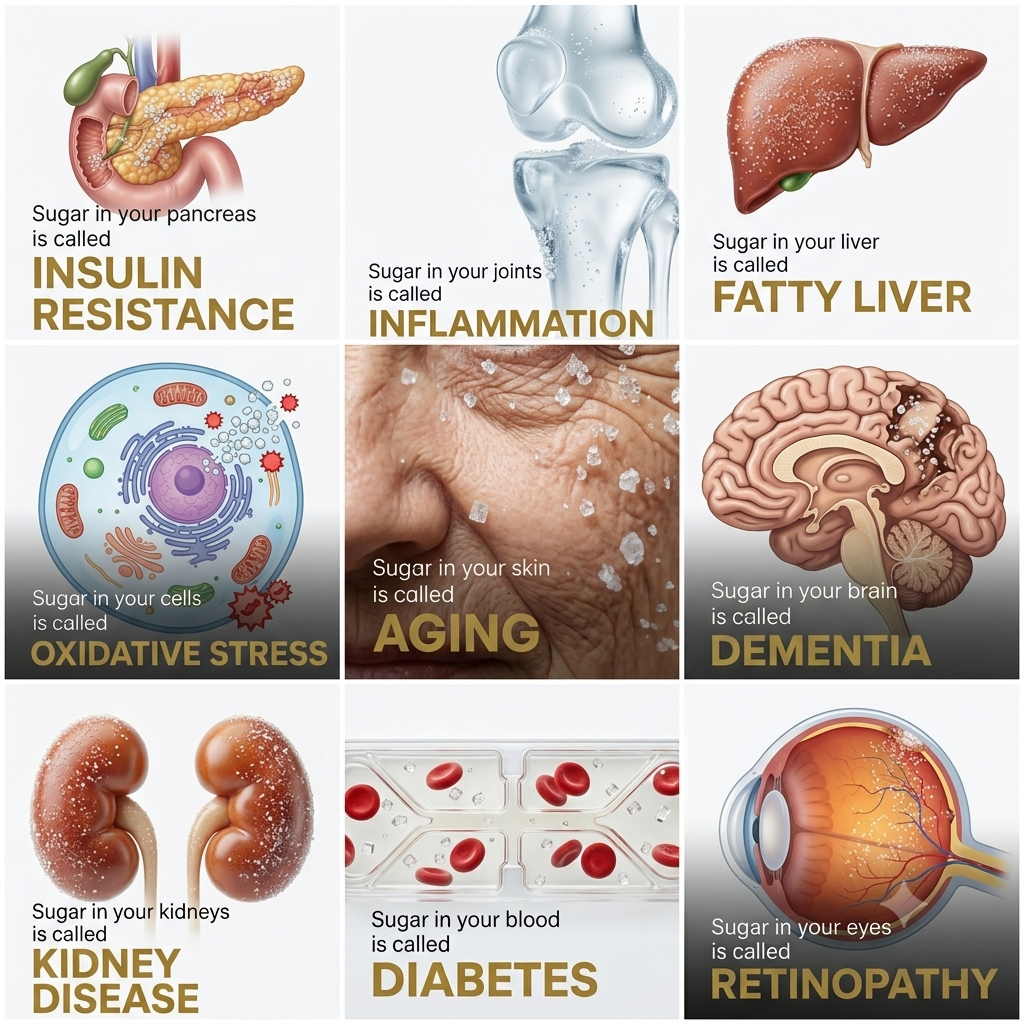
Here is a look at how excess sugar alters nine major systems inside your body:
1. The Pancreas & Metabolism: Insulin Resistance
- Normal Function: Your pancreas produces insulin, a vital hormone that acts as a key to unlock your cells, allowing glucose to enter and be used for energy.
- The Sugar Effect: When sugar constantly floods your bloodstream, your pancreas works overtime to pump out insulin. Over time, your cells stop responding to the constant presence of insulin and lock their doors. This condition known as insulin resistance forces the pancreas to work even harder, eventually leading to elevated blood sugar levels and metabolic distress.
2. The Joints: Systemic Inflammation
- Normal Function: Healthy joints rely on smooth, flexible cartilage and fluid to absorb shock and allow fluid movement.
- The Sugar Effect: Excess sugar promotes the production of inflammatory molecules (cytokines) and leads to the formation of Advanced Glycation End-products (AGEs). This process causes the flexible collagen in your joints to become stiff and brittle, resulting in chronic stiffness, swelling, and joint pain.
3. The Liver: Non-Alcoholic Fatty Liver
- Normal Function: The liver processes nutrients, stores surplus energy as glycogen, and filters toxins from the blood.
- The Sugar Effect: The liver has a limited capacity to store glucose. When flooded with excess sugar, particularly fructose found in sweetened beverages and processed foods, the liver has no choice but to convert the surplus directly into fat. Over time, this fat accumulates inside liver cells, leading to non-alcoholic fatty liver disease (NAFLD).
4. Cellular Health: Oxidative Stress
- Normal Function: Mitochondria within your cells burn glucose cleanly to generate ATP, the chemical energy that powers every biological function.
- The Sugar Effect: Overwhelming your cells with too much glucose is like overloading a small fire with too much wood. The metabolic machinery gets overwhelmed, generating excessive reactive oxygen species (free radicals). This leads to oxidative stress, damaging cellular membranes and accelerating cellular aging.
5. The Skin: Premature Aging
- Normal Function: Collagen and elastin fibers form a resilient structural grid that keeps skin firm, supple, and elastic.
- The Sugar Effect: Through a biochemical process called glycation, excess sugar molecules cross-link with collagen and elastin fibers. This turns flexible protein structures rigid and fragile, causing the skin to lose its bounce and accelerating the appearance of deep wrinkles and sagging.
6. The Brain: Cognitive Decline
- Normal Function: The brain requires a steady supply of clean energy and healthy vascular circulation to maintain focus, memory, and cognitive speed.
- The Sugar Effect: High blood sugar damages the micro-vessels supplying oxygen to brain tissue and impairs local insulin signaling. Over time, chronic glucose spikes contribute to persistent brain fog, memory impairment, and an increased risk of neurodegenerative conditions like dementia.
7. The Kidneys: Diabetic Nephropathy
- Normal Function: Your kidneys contain millions of microscopic filtering units (nephrons) that clear waste from the blood while retaining essential proteins and cells.
- The Sugar Effect: Persistently high blood sugar acts like coarse abrasive particles passing through a delicate mesh. It causes structural damage to the microscopic blood vessels in the kidneys, reducing their ability to filter blood efficiently and potentially leading to chronic kidney disease.
8. The Cardiovascular System: Vascular Damage
- Normal Function: Arteries and capillaries are lined with a smooth layer of endothelial cells that dilate and constrict to manage blood pressure and circulation.
- The Sugar Effect: When glucose cannot efficiently enter your cells, it remains trapped in the blood. Highly sugary blood triggers inflammation along the inner lining of blood vessels, causing them to stiffen, narrow, and develop plaque—significantly increasing the risk of hypertension and cardiovascular disease.
9. The Eyes: Retinopathy
- Normal Function: The retina relies on a dense, delicate network of capillaries to capture light and send visual signals to the brain.
- The Sugar Effect: Because retinal blood vessels are extremely small, they are especially vulnerable to sugar-induced damage. Prolonged high blood sugar can cause these micro-vessels to swell, leak fluid, or close off entirely, depriving retinal tissue of oxygen and impairing vision.
Restoring Balance
Sugar itself is not inherently toxic; glucose is the fundamental fuel your brain and muscles rely on to function every day. The damage occurs when the body experiences chronic overload without adequate recovery periods.
Protecting your body doesn't require drastic, unsustainable overhauls. Small, consistent daily shifts make a profound difference:
- Hydrate thoughtfully: Swap out sugar-sweetened sodas and juices for water, seltzer, or unsweetened tea.
- Pair your carbs: Eat carbohydrates alongside fiber, healthy fats, and protein to slow down glucose absorption and blunt blood sugar spikes.
- Move after eating: Taking a brief 10- to 15-minute walk after meals encourages your skeletal muscles to absorb glucose directly from the blood, reducing the burden on your pancreas.
By keeping blood sugar levels stable, you give your body's complex internal machinery the chance to repair, clean itself, and run smoothly for the long haul.




2 comments
Log in to join the conversationBut i have sweet tooth naw
Chuckles