
The Humans Born Without Fingerprints
Imagine getting to your JAMB registration center, sitting down at the computer, slapping your thumb on the biometric scanner, and hearing the dreaded beep: "No fingerprint detected."
You rub your hands, wipe off the sweat, try again. Still nothing. Everyone in line starts giving you the side-eye, and the operator assumes you're trying to play a fast one.
In Nigeria, where every official process from WAEC/NECO, JAMB, and NYSC to getting a SIM card, opening a bank account, or applying for an international passport obsesses over biometrics, having smooth fingertips sounds like a nightmare. But for a tiny group of people worldwide, this isn't a glitch. It’s a real medical condition called "Adermatoglyphia".
Here is what you need to know about the science of "invisible" fingerprints.
What Exactly Is Adermatoglyphia?
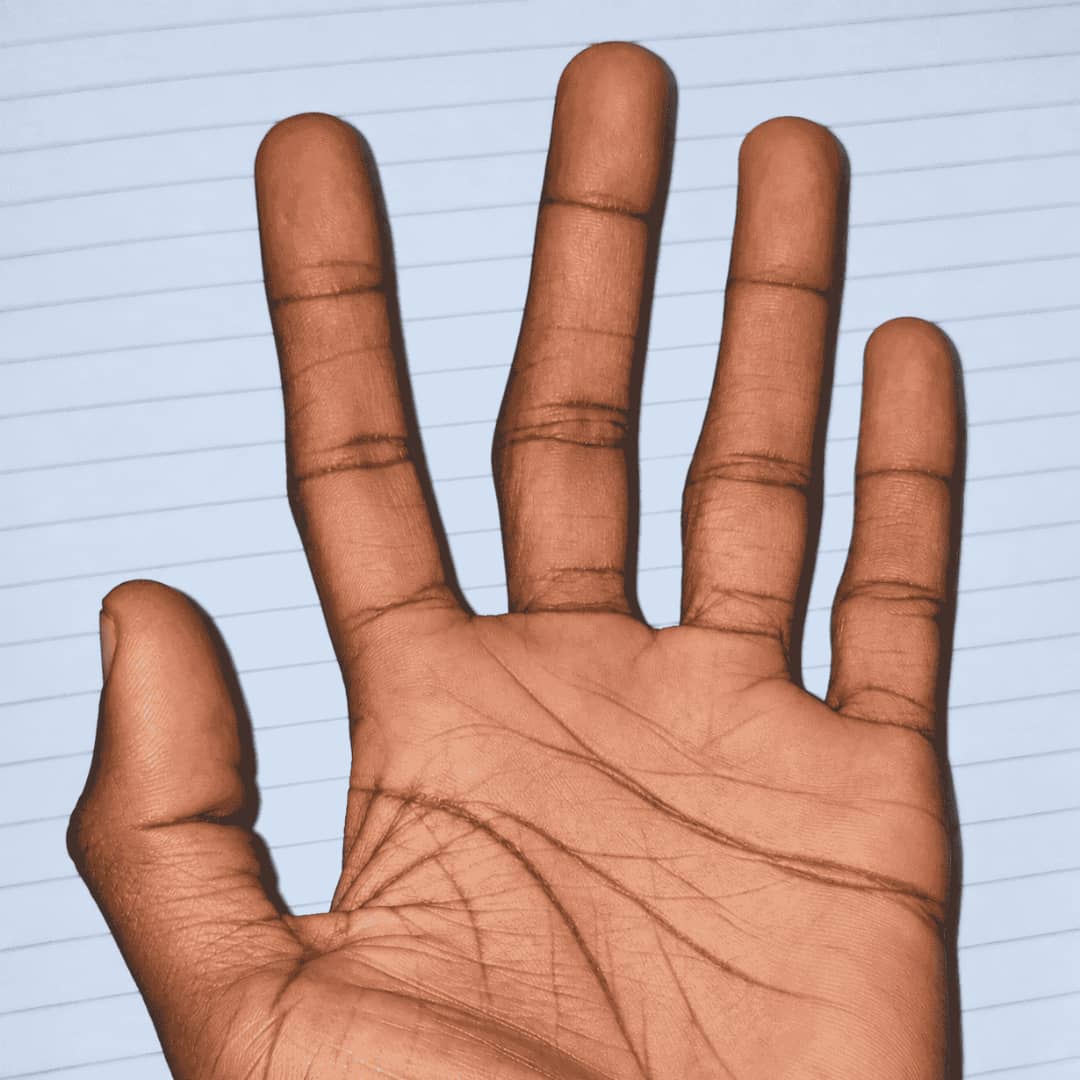
Normally, the skin on our fingertips, palms, toes, and soles has microscopic ridges forming loops, whorls, and arches. These patterns called 'dermatoglyphs' are formed before you are even born and remain unique to you for life.
People with Adermatoglyphia are born with completely smooth fingertips or ridges so faint that a standard optical scanner can't pick them up.
The Cause: It is mostly a genetic condition linked to a mutation in a gene called SMARCAD1, which controls how your skin forms in the womb. Because it follows an autosomal dominant pattern, a parent with the gene has a 50% chance of passing it to their child.
The Symptoms: Beyond having flat fingertips and slightly reduced sweat production on their hands, individuals with isolated Adermatoglyphia are completely healthy.
Real-World Friction: The "Immigration Delay Disease"
Scientists often call it the "immigration delay disease" because most people only realize they have it when trying to cross an international border or register for national IDs.
In everyday life, it creates bizarre, modern-day hurdles: Biometric phone scanners won't unlock; Security checkpoints flag them as errors; Official registrations (like JAMB or passport capture) stall completely.
What Should You Do If Thumbprints Won't Capture?
If you or someone you know genuinely cannot capture a fingerprint despite having clean, dry hands, don't panic:
* Medical Assessment: See a dermatologist. A clinician can inspect the finger pads with a specialized magnifying lens (dermatoscopy) to confirm whether the ridges are absent or just temporary damaged (like from rough manual work, chemicals, or eczema).
* Medical Documentation: If diagnosed, doctors issue an official medical letter explaining the condition.
* Alternative Verification: In major administrative systems, official medical proof allows for alternative verification methods, such as facial recognition, iris scans, or legal sworn affidavits.
Technology was built for the average human body, but nature loves outliers. Having no fingerprints doesn't make someone defective. It just means their unique identity goes deeper than the surface of their skin.




3 comments
Log in to join the conversationHmm
It's a genetic disorder
Even with the fact that no two people have the same finger print, some stills doesn't have any
Yes.