
Beyond the Bandana and the Bulletproof Vest
Part I: The Man the Headlines Couldn't Hold
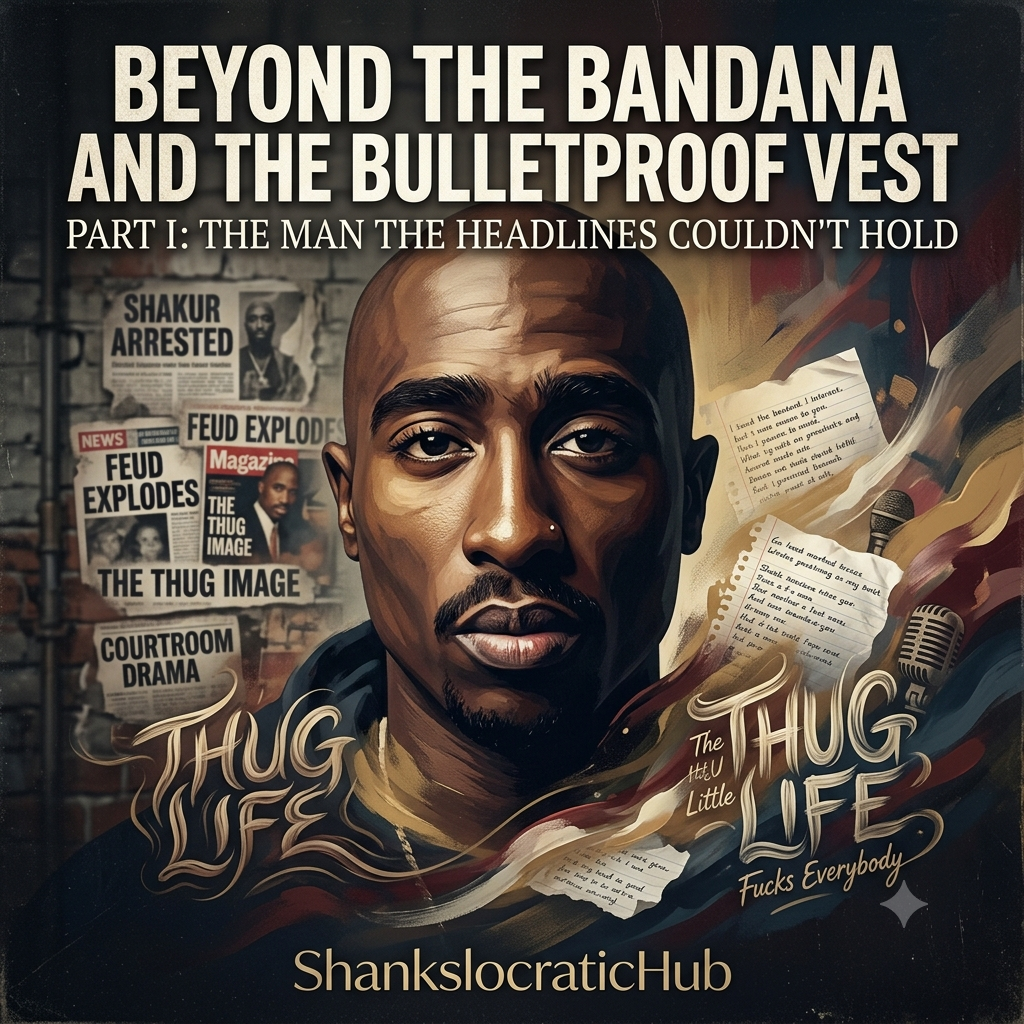
History has a habit of shrinking complicated people into convenient symbols. Tupac Shakur arrived for millions not first as a voice but as a silhouette: the bandana, the tattoos, the courtroom appearances, the feuds, the gunfire. Long before many encountered his ideas, they had already inherited an image. It became easy to dismiss him as another angry rapper glorifying violence. Yet the same artist who unleashed Hit 'Em Up wrote Dear Mama. The same man associated with the word "thug" pleaded with women to recognize their dignity in Keep Ya Head Up. The performer who celebrated California Love also asked in Changes why racism, poverty and police brutality remained stubborn features of American life. The public consumed the spectacle. His music quietly preserved the sociology.
Every generation leaves behind archives that official documents cannot fully capture. Blues carried the memory of segregation. Gospel carried hope through oppression. Jazz improvised freedom when freedom itself was rationed. Hip-hop inherited that tradition, translating abandoned neighborhoods, aggressive policing and inherited trauma into rhythm. Within that lineage, Tupac emerged not merely as a rapper but as one of its most compelling social narrators.
The streets he described were not fictional landscapes created to strengthen an image. They bore the scars of disappearing industries, underfunded schools, the crack epidemic, mass incarceration and institutional neglect. Violence rarely arrived first. More often, it followed poverty, exclusion and hopelessness like an unwelcome inheritance. Again and again, his lyrics returned to communities living on the margins of economic and political power, asking why opportunity seemed reserved for some while suffering remained predictable for others.
Many listeners heard profanity. Others heard criminality. Far fewer paused to hear diagnosis.
Part of the misunderstanding lay in a media culture fascinated by conflict. Cameras lingered on courtroom entrances more than community speeches. Headlines rewarded controversy more generously than compassion. A marketable "thug" proved easier to sell than a thoughtful young man whose lyrics wandered between rage, tenderness, grief and social criticism. Persona became profitable. Poetry became secondary.
Nothing illustrates this more clearly than THUG LIFE. Popular culture often reduced it to a badge of criminality, overlooking Tupac's own explanation: The Hate U Give Little Infants Fucks Everybody. It was less a slogan than an accusation. Neglect children today, and tomorrow's crises will not remain confined to the neighborhoods where that neglect began. Poverty ignored does not disappear. Trauma unaddressed does not evaporate. Eventually, the consequences return to society itself, often in forms politicians condemn without acknowledging the conditions that produced them.
That idea transformed the conversation. Tupac did not ask listeners merely to observe the ghetto. He asked them to ask why the ghetto existed.
That distinction explains why his work continues to resonate decades after his death. He was less interested in sensationalizing suffering than in exposing the structures that produced it. Beneath the headlines stood a young man insisting that communities should be understood before they were judged, and that stories should be heard before stereotypes were believed.
Yet questions about neglected communities do not emerge in isolation. Long before Tupac became a global icon, he had inherited a language of resistance. To understand the artist, we must first understand the world that raised him.


3 comments
Log in to join the conversationTupac Shakur
Tupac!!!
Great article 👏