
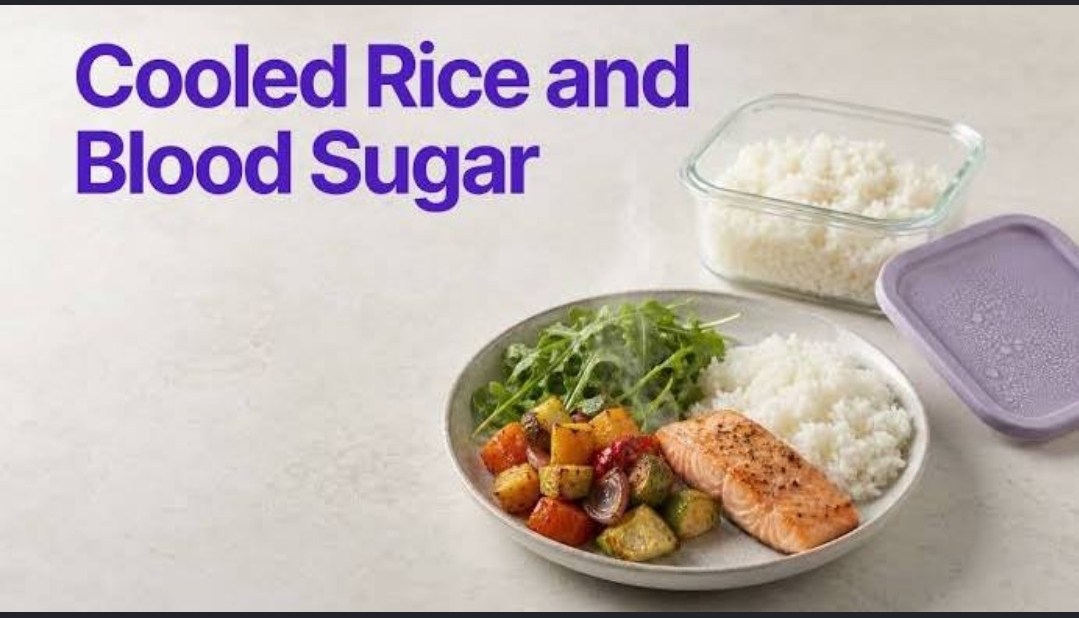
Cooled Rice and Blood Sugar: What the Research Actually Shows
Cooling cooked rice does form resistant starch, and studies in both healthy adults and people with type 1 diabetes found a lower glucose rise compared with rice eaten fresh. Reheating doesn't wipe it out. The catch is that the effect is small, it didn't show up in every trial, and portion size still does more to your curve than temperature does.
You cool your leftover rice overnight, warm it up at lunch the next day, and an hour later your CGM is climbing.
Cold rice is supposed to be the better option. So what gives?
The idea behind it holds up. Cooling rice converts some of its starch into a form your body can't break down as easily. But the internet oversold it. The effect is small, it doesn't show up for everybody, and it was never going to flatten a curve on its own.
What Happens When Rice Cools
Cooking does most of the damage, in glucose terms. Heat blows open the starch granules and leaves a structure your digestive enzymes can tear through fast.
Cooling reverses a little of that. Some of the starch reorganizes into tight crystals enzymes can't get a grip on. Scientists call it retrogradation. Same thing happens to potatoes and pasta in the fridge.
What survives is resistant starch. It acts less like a carb and more like fiber, and much less of it ends up in your bloodstream as glucose.
8 comments
Log in to join the conversationSo make I dey chop cold rice?
I love chilled rice
Chilled as how?😂
The thing shock me😂
This is helpful
So cold rice is more suitable for health?
So cold rice is more suitable for health?
Cold rice ke. When no be ice cream