
Fake Products, Real Danger: Why What’s in Our Markets Should Scare Us All
A Companion Piece to "The Orange Lie"
If you read the breakdown in "The Orange Lie," you already know how big-name global brands tweak their recipes depending on who’s buying, leaving Nigerians with weaker safety standards than consumers in London or Geneva.
But as frustrating as corporate double standards are, there’s an even scarier beast lurking right under our noses: the outright fakes.
We aren't just dealing with weak corporate oversight anymore. We are talking about open-market hustle turned dangerous. Right now, across open-air markets, bus stops, and neighborhood shops, thousands of fake and altered everyday items are quietly making their way into our homes.
What’s Really on the Shelves?
Let’s talk about what’s actually happening in the markets - the things we see every day but might not realize are dangerous:
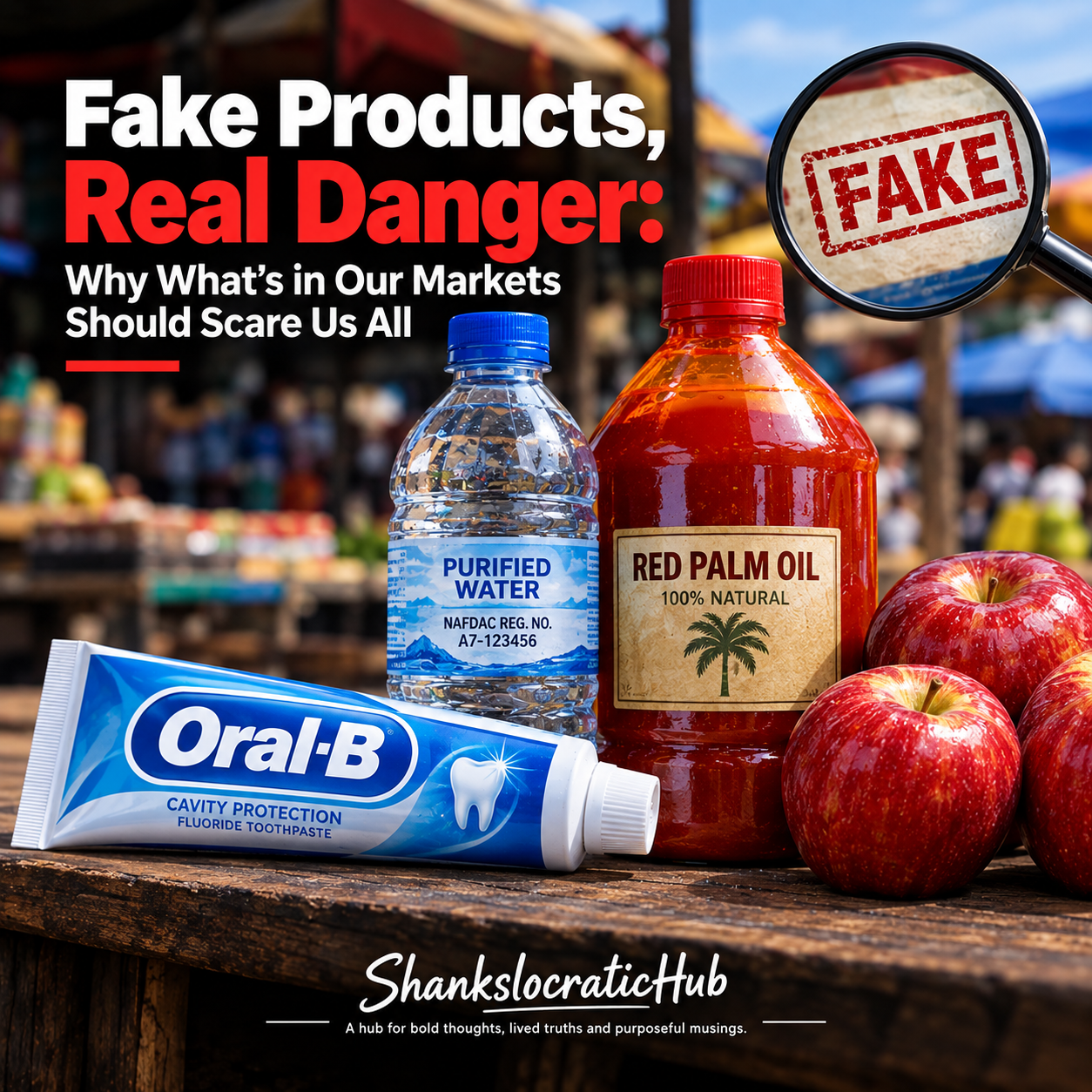
The "Oral B" Scam: Enforcement raids keep busting underground operations churning out knockoff toothpaste. Instead of active fluoride, these tubes are packed with industrial chalk and sketchy binders that wreck your gums and leach heavy metals into your body.
Refilled Bottled Water: Ever opened a bottle of water and felt the cap was just a little too easy to twist off? Counterfeiters routinely collect used plastic bottles, refill them with unsterilized tap or well water, slap on a fake NAFDAC number, and sell them to thirsty commuters.
Dyed Palm Oil & Waxed Apples: That deep red palm oil we all look for in market basins? Unscrupulous vendors are spiking cheap or rancid oil with industrial Sudan dyes - chemical colorants known to cause cancer just to give it that "fresh from the farm" look. Meanwhile, apples are being coated in industrial wax and non-food dyes to mask rot and make them shine under display lights.
Where Are the Guardians?
It’s easy to throw our hands up and ask, “Where is NAFDAC?”
The truth is, NAFDAC and consumer protection bodies like the FCCPC are severely outmatched. With around 2,000 staff members expected to police a nation of over 220 million people and a budget where over 97% goes straight to basic overhead, the math just doesn't add up.
Because our enforcement agencies are constantly playing catch-up, bad actors face very little risk. The profits are huge, the fines are low, and the market stays flooded.
The Human Cost: It's Personal
This isn't just about losing a few hundred Naira on a bad purchase. It’s about our health.
Ask any doctor in Lagos, Abuja, or Port Harcourt right now: they are seeing an unprecedented spike in young people coming in with sudden kidney failure, liver issues, and unexplained stomach ailments. When your body is constantly forced to filter out chemical dyes, heavy metals, and dirty water, the organs eventually burn out.
We are literally paying to poison ourselves, one market run at a time.
Taking Back Control of Your Basket
We can (and should) keep demanding better regulation, stiffer penalties, and actual accountability from government agencies. But while we wait for systemic change, you have to be your own quality control officer.
Here is how to protect your home starting today:
Inspect the Seal: Never drink bottled water if the tamper-evident ring is already broken, loose, or glued down.
The Palm Oil Stain Test: Pure palm oil washes off your hands relatively easily with regular soap. If the red pigment leaves a stubborn, artificial stain on your skin or plastic containers, toss it out.
Wash and Peel: Don't just rinse fruit. Soak apples in warm water with a bit of baking soda or vinegar, or simply peel the skin off entirely before giving it to your kids.
If the Price is Too Good, Walk Away: If a vendor is selling top-shelf toothpaste or branded oil at half the normal market price, don't celebrate a bargain, be suspicious.
Speak Up: If you buy a product that looks, smells, or tastes fake, don't just throw it away in silence. Post about it, warn your neighbors, and report it to NAFDAC’s online complaint portals. Public pressure works.
Over to You
We can't change the whole market overnight, but we can change how we shop, what we accept, and how loud we get when things aren't right.
Have you run into any fake or suspicious products in your area recently? How do you check what you buy before taking it home? Let’s talk about it in the comments below!


6 comments
Log in to join the conversationI can tell you for free
85% of what we use in this country are either fake, substandard or banned!
Once you see an underpriced good, I advise you to Walk away
Even this country and the people are so fake what are we expecting?
Walai
Don't buy fake stuff like this because it's cheap, please
Some are not even cheap and are hard to recognize