
Sacred Masks, Viral Screens: The Taboo's Last Stand
In Ibadan last week, a single upload nearly collapsed centuries of belief.
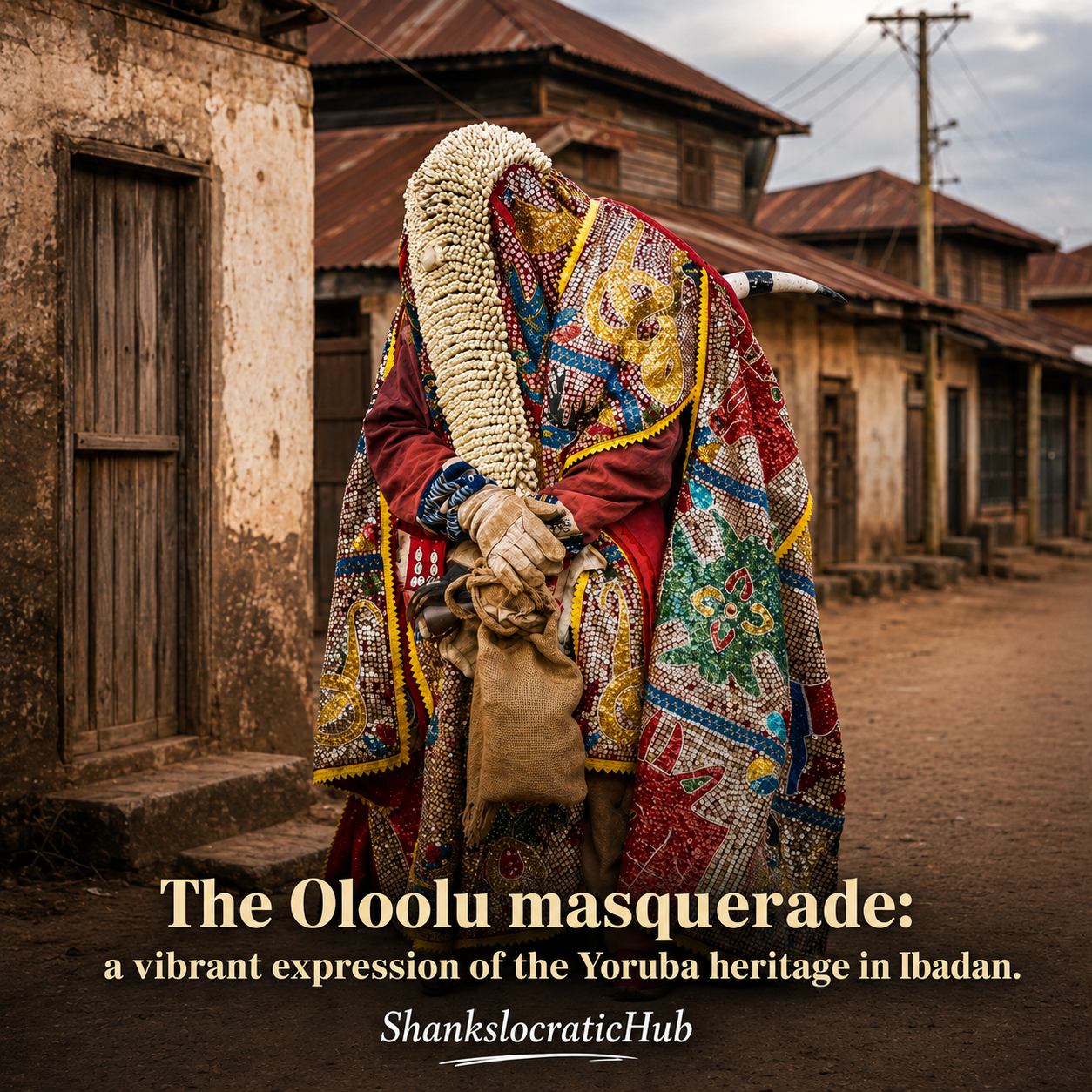
Wasilat, a young woman with a smartphone and no malice, pointed her camera at what she believed was a passing spectacle. Yet what she captured was more than footage. It was a sacred boundary entering the digital age. Early reports identified the figure as the revered Oloolu masquerade, while subsequent accounts suggested it was the Alawo Oloolu. Regardless of which was ultimately correct, the consequences were immediate: panic, cleansing rites, and rumours of death that travelled faster than truth itself. Within hours, a perceived transgression became public property, dissected by strangers who understood neither the ritual nor the prohibition behind it.
But this is not merely a story about a TikToker and one revered masquerade. It is a warning about what happens when ancient boundaries collide with modern speed.
Taboos have long functioned as a culture's invisible architecture, holding communities together through shared restraint rather than written law. They endured because some things remained unseen, unspoken, and geographically bound. Their authority depended not merely on belief but on limits of access, distance, and knowledge. Technology has erased all three. A sacred prohibition shaped for a world without lenses now confronts a reality where every pocket holds a broadcast studio. The question is no longer whether tradition can survive the internet. It is whether taboos can exist at all when visibility has become the default.
Social media has democratised witnessing, but not understanding. Wasilat may never have grasped the cultural weight of what she recorded. Every day, millions scroll past sacred boundaries, mistaking reverence for entertainment, consequence for superstition, and caution for cowardice. The algorithms reward what spreads, not what should pause for context. Yet if we dismiss every taboo as backward, we risk flattening cultural memory into content, stripping communities of rituals that have long anchored identity, continuity, and belonging.
The challenge, however, does not rest with technology alone. Tradition, too, faces a new responsibility. In an age where secrecy can no longer be guaranteed by geography or silence, communities must find thoughtful ways to teach the meaning behind their sacred boundaries without necessarily surrendering their sacredness. Younger generations now inherit smartphones long before they inherit cultural instruction. When understanding fails to keep pace with access, misunderstanding becomes almost inevitable.
The future therefore demands a new literacy: the ability to recognise that some boundaries are not obstacles to overcome, but bridges to preserve. Technology will not stop advancing, nor should it. The real question is whether our reverence can keep pace with our reach; whether we can hold a phone and a tradition, both at once.



5 comments
Log in to join the conversationOmo, I saw her sacrifice video
Who was sacrificed?
No human was sacrificed; a goat was offered for the cleansing rite.
In the modern day world, clashes with cultural weights can't be avoided!
This is deeper than just a viral video. It’s really about what happens when culture meets technology without context.