
In 1988, psychiatrists documented one of the most extraordinary and controversial medical cases ever reported.
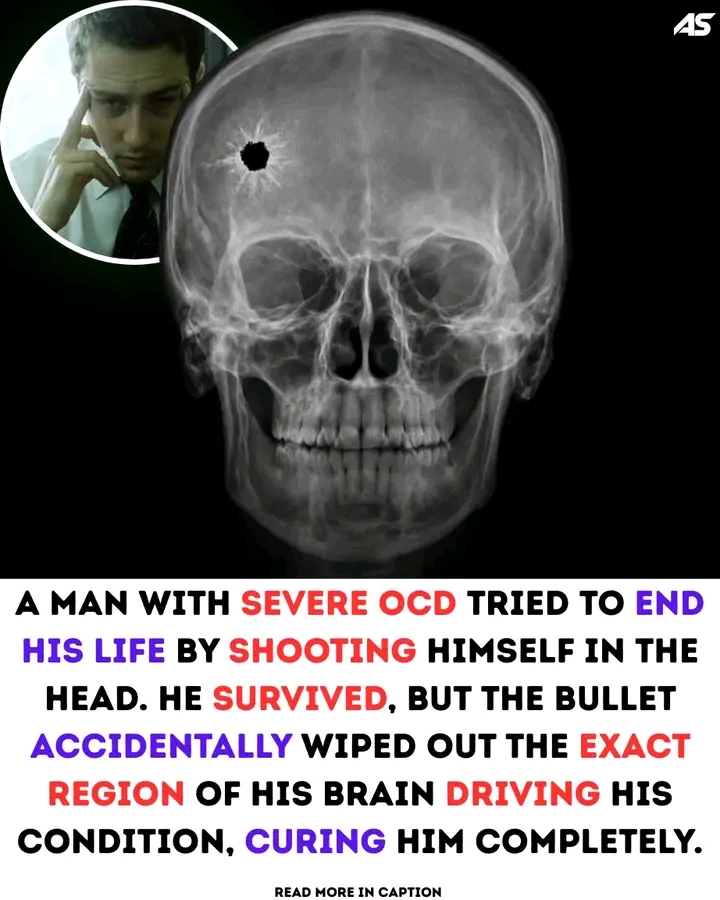
A 19-year-old man with severe, treatment-resistant obsessive-compulsive disorder (OCD) attempted to take his own life using a .22-caliber firearm. He survived, and the bullet lodged in the left frontal region of his brain.
Before the incident, his OCD dominated every aspect of his life. He spent hours each day performing compulsive rituals, including excessive handwashing and repetitive checking behaviors, making it nearly impossible to attend school or live normally. Remarkably, within weeks of recovering from the injury, doctors observed that his obsessive thoughts and compulsive behaviors had almost completely disappeared. Follow-up reports indicated that he returned to school, excelled academically, and rebuilt his life.
Neurologists believe the injury accidentally disrupted brain circuits involved in OCD, particularly networks connecting the frontal cortex with deeper brain structures. This unexpected outcome helped reinforce later research showing that specific brain circuits play a major role in OCD, ultimately contributing to the development of modern neurosurgical and deep brain stimulation treatments for the most severe, treatment-resistant cases.
However, this was an extraordinarily rare and unintended event—not a treatment. Brain injuries are unpredictable and usually cause devastating, lifelong disabilities rather than improvements. Today, evidence-based treatments for OCD include cognitive behavioral therapy with exposure and response prevention (ERP), medication, and, in rare cases, carefully controlled neurosurgical procedures or deep brain stimulation performed by specialists.


21 comments
Log in to join the conversationThat's why slap can reset some people's brain
Real oo 🤣
A powerful reminder to always read beyond the headline the real lesson here is about neuroscience, not self-treatment.
Thankfully, today's treatments are based on years of careful research, not chance events like this.
The brain can surprise us in ways we never expect. Nature is incredibly complex.
This case highlights why medical research and neuroscience are so important.
Imagine surviving something so severe and waking up with symptoms that had controlled your life almost gone. Truly remarkable.
Mental health deserves the same attention and compassion as physical health.
This is both fascinating and heartbreaking. One life-changing tragedy ended up teaching doctors something valuable.
Stories like this make you appreciate how specific brain regions influence our thoughts and behaviors.
Modern medicine has come a long way with therapies like ERP and deep brain stimulation.
OCD is far more serious than many people realize. It's not just about being neat or organized.
The important takeaway is that this was an accident not a treatment. No one should misinterpret it.
Cases like this remind us that science often advances through unexpected discoveries.
It's amazing that such a tragic accident contributed to medical research that helps people today.
This shows how much we still have to learn about the brain and mental health.
The human brain is still one of the greatest mysteries in medicine. Incredible case.
Oh my, his plan for suic1de failed successfully 😅
🤣🤣
lol, don’t try this at home
📌🤣