
Biggest marketing mistake in African web3
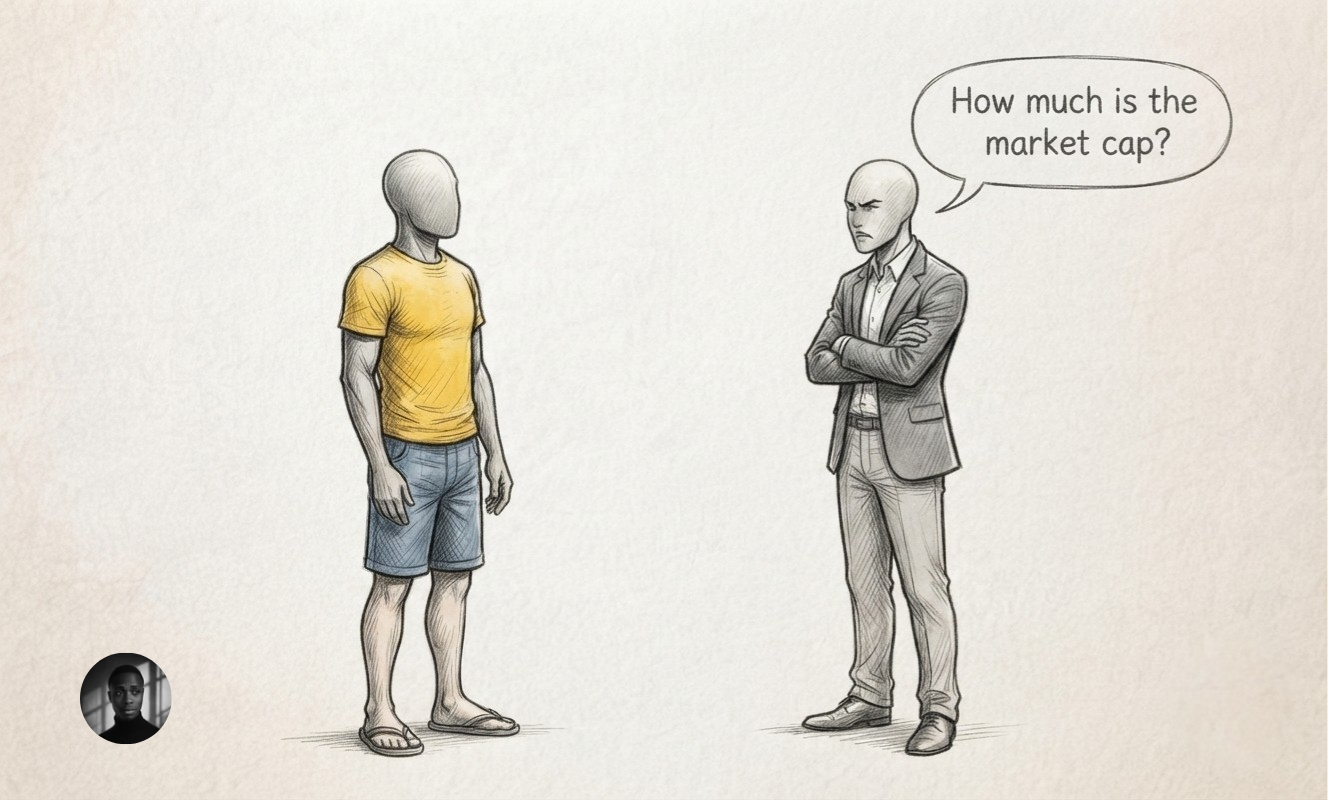
The biggest marketing mistake in African Web3 isn't the lack of innovation. It's that too much attention goes to tokens instead of the products those tokens are supposed to power.
Somewhere along the way, we've started treating a token as if it is the project.
It isn't.
A token is an economic layer. The product is what solves a real problem.
If the first thing people hear about a Web3 project is its token, they naturally assume it's another speculative asset. But if the first thing they hear is how the product makes payments easier, improves identity, enables ownership, or removes friction, they begin to see the value beyond price charts.
The world's most impactful technology companies weren't adopted because people were excited about their financial models. They were adopted because they built products people wanted to use.
Web3 shouldn't be any different.
As creators, founders, and KOLs, we have an opportunity to shift the conversation. Instead of asking, "What's the token doing?" we should also be asking, "What problem does this product solve?"
The token may power the ecosystem, but the product is what earns trust.
If we want mainstream Web3 adoption across Africa, we need to market utility with the same energy we've been marketing tokens.
That's how ecosystems become sustainable.
13 comments
Log in to join the conversationNice one
Good one sha
So what do we do with the problem solved? What problem is there to solve?
Is it just for transactions? Transactions of which business?
This is exactly why I made the post, and I genuinely love this question. 😂
A lot of people think blockchain is just about sending Bitcoin from one wallet to another. That's actually one of the smallest things it does.
One of the biggest problems blockchain is trying to solve is ownership.
And by ownership, I don't just mean money. I mean ownership of your identity, your digital assets, your reputation, and even the applications you use.
There are a lot of things we think we own until we suddenly don't.
Take your X account, for example. You spend years building an audience, posting content, and creating relationships. But if your account gets suspended tomorrow, you can't simply move everything you've built to another platform. Your followers, your posts, and your online identity are all tied to X's system. Whether you get them back depends on X, not you.
The same thing happens with games, digital purchases, reward points, subscriptions, and even money in some situations. We often say they're "ours," but in reality, they exist inside someone else's platform.
Blockchain flips that model.
Instead of your identity being created and controlled by every platform you join, your wallet becomes your digital identity. You can use that wallet to access different Web3 applications without creating a new account every time. More importantly, your assets stay with you, not with the application you're using.
Think about cash for a second.
If you have ₦5,000 in your pocket and you want to buy pure water, you simply hand the cash to the seller. The exchange happens directly between both of you. You don't need another company sitting in the middle to approve that transaction.
Now compare that to making the same payment through a bank. The transaction happens inside the bank's system, so the bank processes it before the recipient receives the money.
Blockchain brings that direct interaction into the digital world. If two people both have blockchain wallets, they can exchange digital assets directly over the blockchain network without relying on a single company to process every transaction. The blockchain itself records and verifies what happened.
But payments are only the beginning.
Because blockchain is infrastructure, people can build almost anything on top of it: financial services, games, marketplaces, social media, ticketing systems, digital identity, supply-chain tracking, voting systems, and much more.
That's why Web3 isn't just another name for cryptocurrency.
Crypto is one application of blockchain, just as email is one application of the internet.
Web3 is the broader ecosystem of applications built on blockchain technology, designed to give users more direct control over their identity, assets, and interactions online.
Does that mean banks become useless? No.
Does it mean every centralized platform disappears? Also no.
It simply gives people another option... one where they don't always have to depend on a single company to own, store, or control everything they do online.
That's why I don't think Web3 is really about crypto.
I think it's about redefining digital ownership in a world where we've become so used to renting our online lives that we rarely stop to question who actually owns them.
I got lost at some points but I think I understand better now
True
I don't know anything about web 3
Let me ask you a question first: do you know what Bitcoin is?
If you know Bitcoin, then you already have a starting point for understanding Web3.
The technology that makes it possible to send and receive Bitcoin is called the blockchain. Web3 is simply the next evolution of the internet built on that same blockchain technology.
Here's the easiest way to think about it:
Let us say you have ₦50,000 in cash in your pocket. That's your money... you can spend it without asking anyone for permission.
Now imagine the same ₦50,000 is in your bank account. It's still your money, but it exists within the bank's system. The bank can freeze the account, request additional verification, or temporarily restrict access under certain circumstances.
That's similar to today's internet (Web2). Your photos, messages, followers, and even your account exist on platforms owned by companies. If they suspend or delete your account, you could lose access to everything you've built there.
Web3 uses blockchain to give users more direct control over their digital wallets, assets, and online identity, rather than having everything tied to a single company's platform.
So, in simple terms:
Bitcoin is one application of blockchain technology. Web3 is a broader internet ecosystem built on that same blockchain foundation.
So how is it used? And what exactly is a token?
Bro as beautiful as web3 is, it has it disadvantages oh, what happens when you lose access to your acct?? i lost my Ethereum till today because i lost my word phrases on trust wallet.