
What do you think about this?
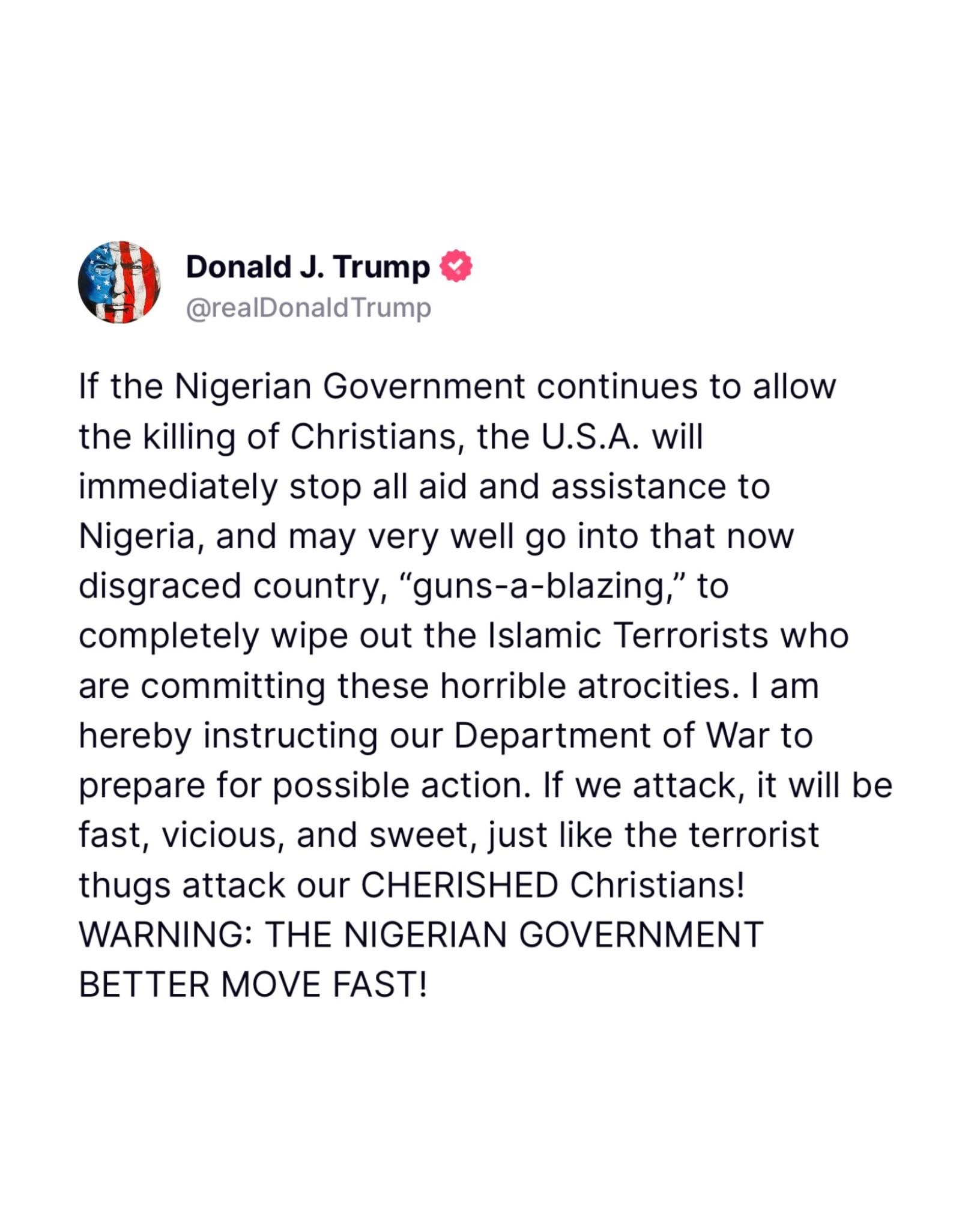
An aggressor never admits aggression. They rarely say, “We want your land, and we’ll take it by force.” Instead, they hide intent behind moral or emotional pretexts — “You’re evil,” “You’re a threat,” or “We’re protecting others.” They blackmail, demonize, and then strike.
When a superpower makes grand moral declarations — “to protect Christians,” “to stop terrorism,” “to defend democracy” — the motives are rarely pure. Such rhetoric usually conceals geopolitical or economic goals, with moral language serving as a public mask.
1. The Ancient Pattern
This pattern isn’t new — it’s ancient.
Even in the Bible, Pharaoh made excuses for every stage of his oppression:
- To kill the Hebrew male children, he claimed it was to prevent rebellion, not genocide.
- To keep the Israelites enslaved, he justified it as preserving Egypt’s stability and economy.
- To pursue them after letting them go, he portrayed it as reclaiming what “belonged” to Egypt.
From Pharaoh to modern empires, aggressors rewrite their greed as necessity, their fear as justice, and their violence as virtue.
2. Pattern of Justification for Interventions
- The U.S. has repeatedly invoked human rights, religion, or counterterrorism to rationalize interventions: Iraq (WMDs, 2003), Libya (humanitarian pretext, 2011), Syria (“red line”), Afghanistan (terrorism).
- These narratives rally domestic support while advancing strategic interests — oil access, regional influence, or containment of rivals like China or Russia.
3. Nigeria’s Strategic Relevance
- Nigeria is Africa’s largest economy and population hub, rich in oil, gas, and minerals, and central to West Africa’s stability.
- The U.S. has been losing influence there to China’s expanding trade and infrastructure footprint.
- Any internal unrest could be leveraged as a pretext for “intervention” or “stabilization,” granting renewed Western access to military or resource advantages.
4. Religious Framing as Political Weapon
- Narratives that reduce Nigerian violence to “Muslims killing Christians” oversimplify complex realities.
- Most conflicts — such as herder–farmer clashes — are rooted in economic, environmental, and ethnic tensions, not purely religion.
- Framing them as “Islamic terrorists vs. Christians” is a manipulative propaganda tactic — emotionally powerful and easily digestible for Western audiences, even when it distorts the truth.
5. Timing and Domestic Utility
- Leaders like Trump benefit politically by appearing strong against foreign threats or as defenders of Christianity — messaging that appeals to conservative voter bases.
- Such rhetoric often serves domestic political gain more than genuine humanitarian concern.
In short: The methods haven’t changed since Pharaoh — only the language has. Moral excuses remain the oldest disguise for power and control.


14 comments
Log in to join the conversationHe is just messing around
Trump will never intervene on the affairs of a sovereign state
Trump is just joking around I guess
Nnayi Trump Please come to our rescue
from what exactly???
Never trust trump! Wicked in disguise
very true
Canada has joined too
To do what😂
Absolutely
I recommend
you are siding Trump??
do you know what ya saying oga?
America is the reason behind every problem in this world. I keep saying that
very correct